
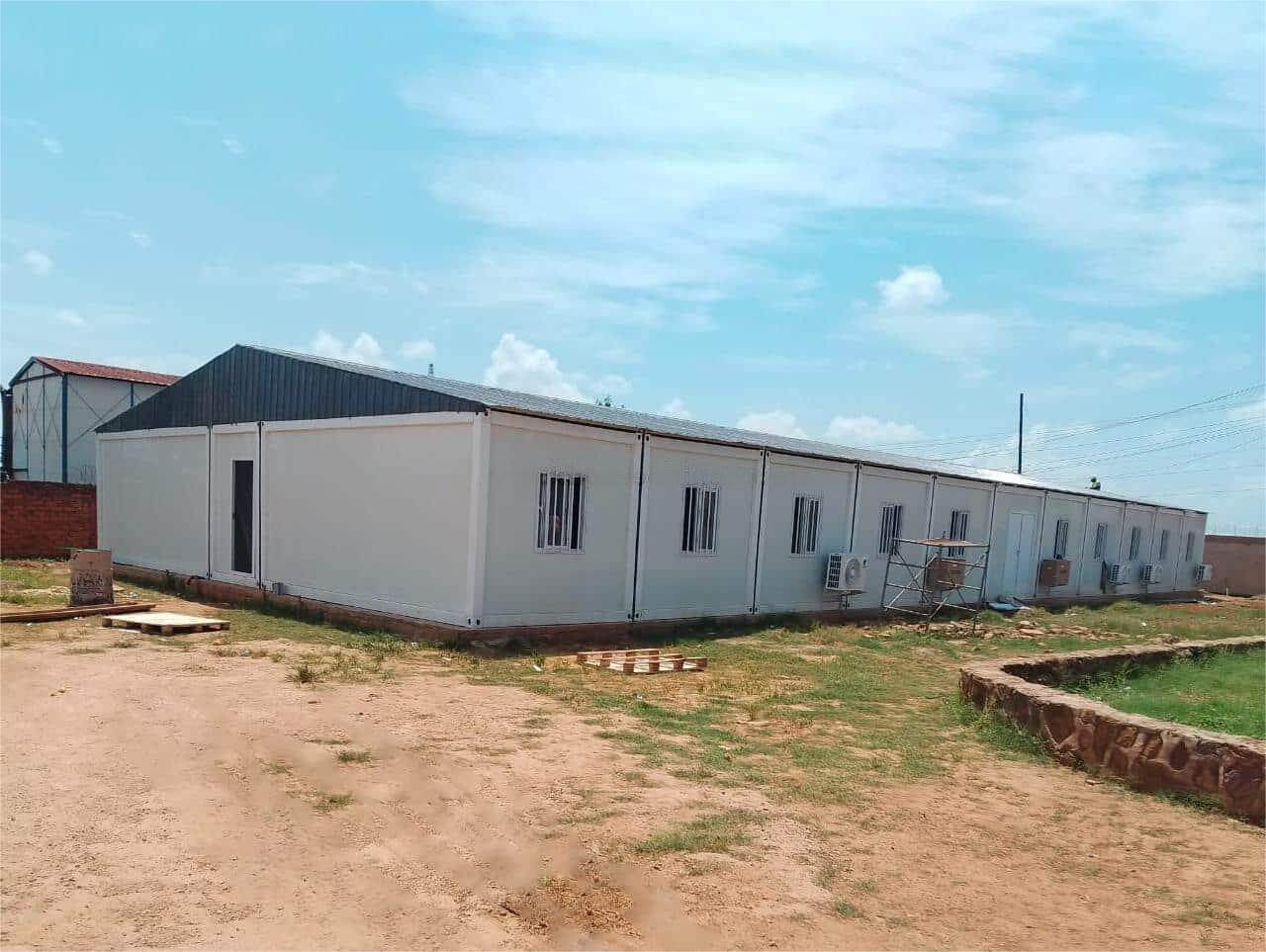
What Is a Prefab Modular Home? (How It Differs from Traditional Construction & Key Benefits)
Introduction
Prefabricated modular homes— also known as modular homes, prefabricated buildings, or off-site construction — are one of the fastest-growing segments in the global construction industry.
But what exactly are they? And how do they compare to traditional on-site construction?
This guide answers both questions, helping B2B buyers, developers, and project managers understand why prefab modular construction is gaining popularity—and whether it's the right choice for their next project.
What Is a Prefab Modular Home?
A prefab modular homeA building constructed from factory-prefabricated modules or components that are transported to the site for assembly.
Key features:
Factory production: Building components or complete room modules are manufactured in a controlled factory environment.
Module-basedEach prefabricated component is a fully finished unit, often with plumbing, electrical, and finishes already installed.
On-site assemblyModules are transported and assembled on the foundation.
Permanent or temporary: Designed for either application
Common use cases:
Workforce housing and dormitories
Site offices and project camps
Single-family homes and villas
Commercial buildings, hotels, and restaurants
Emergency and disaster relief housing
Prefab Modular vs. Traditional Construction: Key Differences
Aspect | Prefab Modular | Traditional (Site-Built) |
|---|---|---|
Construction site | Factory + On-site Assembly | All on-site |
Timeline | 50-60% faster | 12-18 months typical |
Quality control | Factory-controlled, consistent | Weather-dependent, variable |
Labor requirements | Fewer workers on-site | Large on-site workforce |
Material waste | Reduced (Factory Optimized) | Higher (on-site cutting/trimming) |
Weather impact | Minimal (indoor production) | Significant (rain, heat delays) |
Design flexibility | High (modules can be configured) | Very high (custom on-site) |
Permitting | Often faster (standardized designs) | May be lengthy |
ROI | Faster (earlier occupancy) | Slower (longer build time) |
Defect rates | Fewer defects after completion | Higher risk of on-site errors |
7 Key Benefits of Prefab Modular Homes
1. Dramatically Faster Build
This is the biggest advantage: factory production and on-site work can happen at the same time.
Time savings: Prefabricated construction can shorten the construction schedule by50-60%compared to traditional methods
Real-world example: A 150 sqm container home in the Philippines was completed in just15 business days
Traditional comparison: 120-210 days for stick-built vs. 15-30 days for modular
Why it matters: Faster construction enables earlier occupancy, sooner rental or sales revenue, and quicker ROI.
2. Cost Efficiency
Prefab modular construction delivers significant cost savings:
Labor savings: Factory production requires fewer on-site workers
Material efficiency: Reduce waste with optimized cutting and bulk purchasing
Predictable pricing: Reduced exposure to on-site variables and labor cost inflation
Cost range: $100-$180/SF for prefab vs. $150-$250/SF for traditional
Potential savings: Prefab can reduce construction costs by up to 10%.
3. Superior Quality Control
Factory production ensures consistent quality:
Controlled environment: No weather-related compromises
Standardized processesEach module built to the same specifications
Lower defect rates: Post-delivery defects and warranty claims are significantly reduced
Precision engineeredModules are designed and built to exact specifications
4. Sustainability and Environmental Benefits
Prefabricated modular construction is inherently more sustainable:
Reduce waste: Factory optimization reduces material waste
Resource efficiencyBulk purchasing and standardized cutting reduce consumption
ReusabilityModules can be disassembled, relocated, and reused
Circular economy: Aligns with modern sustainability principles
Energy efficiency: Factory-built insulation and sealing often outperform site-built solutions
5. Flexibility and Scalability
Modular design delivers exceptional flexibility:
Multiple configurationsUnits can be combined by splicing and stacking.
Adaptable layoutsDifferent combinations suit different use cases and site constraints.
Easy expansionAdditional modules can be added as needs grow
Moveable: Compact, sturdy design enables whole-unit transport
6. Minimized On-Site Disruption
Fewer construction activities on-site mean:
Less noise and dustfor neighboring properties
Reduced trafficfrom construction vehicles
Minimal impacton sensitive environments
Safer work environmentfor workers
7. Durability & Longevity
Contrary to outdated perceptions, prefab modular homes are oftenmore durablethan traditional construction:
Built for transportModules are built to survive shipping — rugged and durable.
Advanced materials: Engineered timber, protective coatings, and corrosion-resistant steel
Weather resistance: Designed to address specific climate challenges
Long lifespan: Lasts for generations with proper maintenance
Common Misconceptions About Prefab Modular Homes
Misconception 1: "Prefabricated homes look cheap and boxy"
RealityThe aesthetic gap between modular and traditional homes has narrowed significantly. Modern prefabricated homes now feature architect-designed layouts, expansive windows, and premium finishes.
Misconception 2: "Prefabs are always cheaper"
Reality: Prefab is not automatically cheaper than traditional construction. In straightforward metro infill locations with volume builders, cost differences can narrow. However, theTime-to-market advantageoften delivers better ROI regardless.
Misconception 3: "Prefabricated homes are less durable"
Reality: They are oftenmore durableThey are engineered to withstand transport and installation, featuring advanced technologies and protective finishes.
Misconception 4: "You can't customize prefab homes"
Reality: Prefab offersenhanced design flexibilityPanels and modules can be built to any size or design. Many manufacturers offer extensive customization options.
When Is Prefab Modular Most Practical?
Prefab modular construction is ideal for:
Scenario | Why Prefab Works |
|---|---|
Remote locations | Reduces on-site labor and logistical challenges |
Tight deadlines | 50-60% faster delivery |
Workforce housing | Standardized, repeatable units |
Disaster recovery | Rapid deployment of quality shelters |
Budget-friendly projects | Predictable costs, less waste |
Environmentally Sensitive Areas | Minimal on-site disruption |
Projects requiring future expansion | Modular add-ons are simple to use. |
Conclusion
A prefab modular homeis not just an alternative to traditional construction — for many projects, it's the superior choice.
The key differences are clear:
Speed: 50-60% faster
Quality: Factory-controlled consistency
Cost: Reduced labor and material waste
Sustainability: Reduced waste and enhanced reusability
Durability: Engineered for strength
The advantages aren't theoretical — they're being proven daily in projects worldwide, from Philippine typhoon recovery to Indonesian mining camps and European residential developments.